

 Image 1 of 1
‘The most perceptive piece of writing on Peter Pan I’ve yet read, not merely in terms of content and deep speculation – Bolt’s style is what makes it so engaging: succinct and articulate, yet at times almost lyrical.’ – Andrew Birkin, writer of the BBC’s award-winning series The Lost Boys (1978)
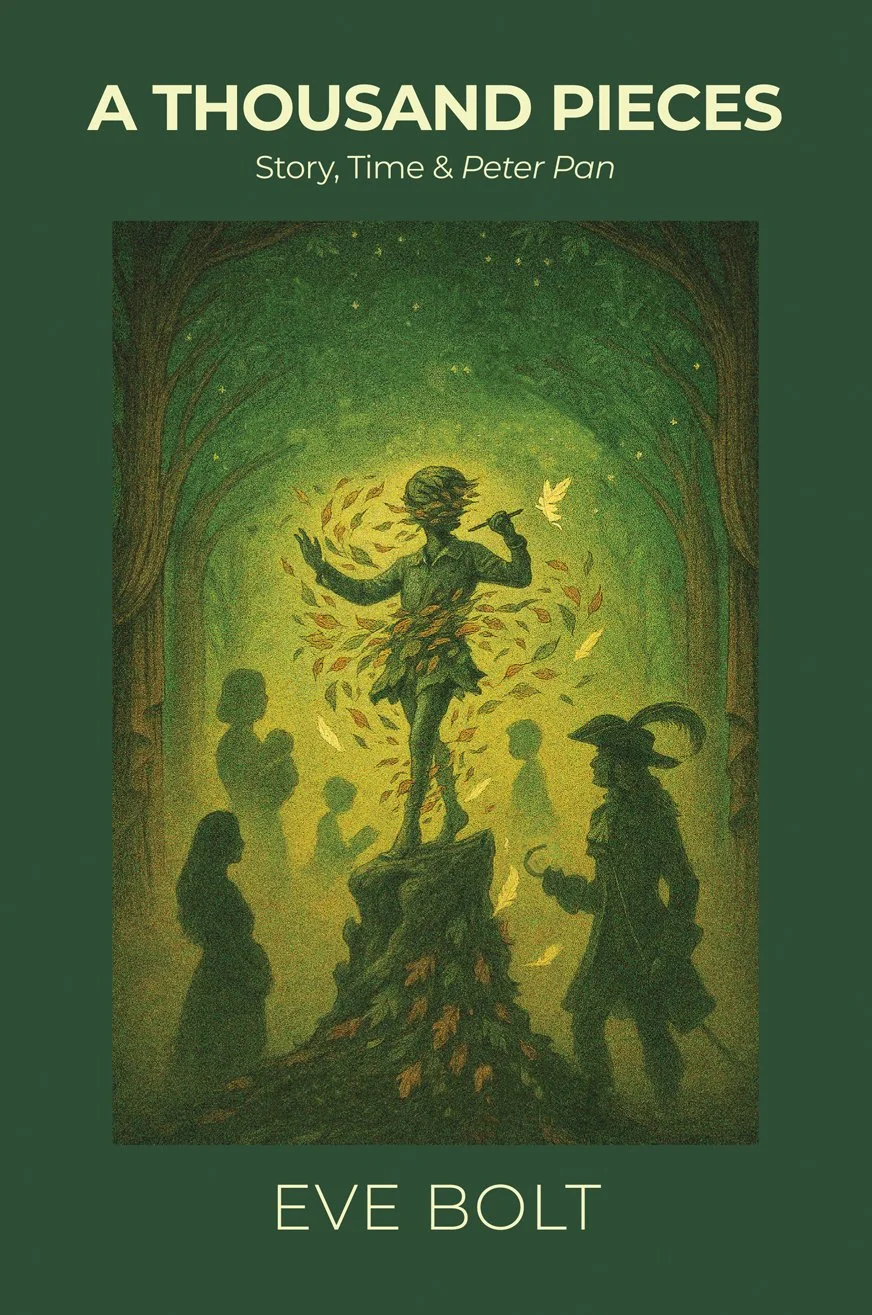
Peter Pan has flown across pages, stages, screens and dreams for over a century. In this academic work, Eve Bolt ponders how a great story thrives through transformation. With close readings of J.M. Barrie’s Panthology – the novel The Little White Bird (1902), play Peter Pan (1904) and children’s novel Peter and Wendy (1911) – Bolt shows how The Boy Who Would Not Grow Up has aged over generations.
Framing her work with the ephemeral concepts of Story and Time, Bolt brushes the fairy-dust off dormant details and charts eclectic connections. From philosophy, myth and scripture to the Brontës and Byron; through the Napoleonic Wars, the long shadow of empire and twenty-first century science, Bolt presents the tale’s boundless meanings. She considers how the many forms of Peter Pan speak to the dynamic natures of origin, identity, imagination, truth and storycraft.
Honouring a rich legacy of scholarship – from Andrew Birkin; R.D.S. Jack; R.L. Green; Cynthia Asquith; Denis Mackail; Peter Hollindale; Maria Tatar, Rosalind Ridley and more – Bolt invites us, as Barrie did, to take part in the story’s creation.
‘When the first baby laughed for the first time, its laugh broke into a thousand pieces, and they all went skipping about, and that was the beginning of fairies.’ – J.M. Barrie, Peter and Wendy (1911)
About the Author
Eve Bolt graduated with a First Class degree in English from Queen Mary University of London, where this book began as her dissertation.
ISBN: 9781910996928
‘The most perceptive piece of writing on Peter Pan I’ve yet read, not merely in terms of content and deep speculation – Bolt’s style is what makes it so engaging: succinct and articulate, yet at times almost lyrical.’ – Andrew Birkin, writer of the BBC’s award-winning series The Lost Boys (1978)
Peter Pan has flown across pages, stages, screens and dreams for over a century. In this academic work, Eve Bolt ponders how a great story thrives through transformation. With close readings of J.M. Barrie’s Panthology – the novel The Little White Bird (1902), play Peter Pan (1904) and children’s novel Peter and Wendy (1911) – Bolt shows how The Boy Who Would Not Grow Up has aged over generations.
Framing her work with the ephemeral concepts of Story and Time, Bolt brushes the fairy-dust off dormant details and charts eclectic connections. From philosophy, myth and scripture to the Brontës and Byron; through the Napoleonic Wars, the long shadow of empire and twenty-first century science, Bolt presents the tale’s boundless meanings. She considers how the many forms of Peter Pan speak to the dynamic natures of origin, identity, imagination, truth and storycraft.
Honouring a rich legacy of scholarship – from Andrew Birkin; R.D.S. Jack; R.L. Green; Cynthia Asquith; Denis Mackail; Peter Hollindale; Maria Tatar, Rosalind Ridley and more – Bolt invites us, as Barrie did, to take part in the story’s creation.
‘When the first baby laughed for the first time, its laugh broke into a thousand pieces, and they all went skipping about, and that was the beginning of fairies.’ – J.M. Barrie, Peter and Wendy (1911)
About the Author
Eve Bolt graduated with a First Class degree in English from Queen Mary University of London, where this book began as her dissertation.
ISBN: 9781910996928